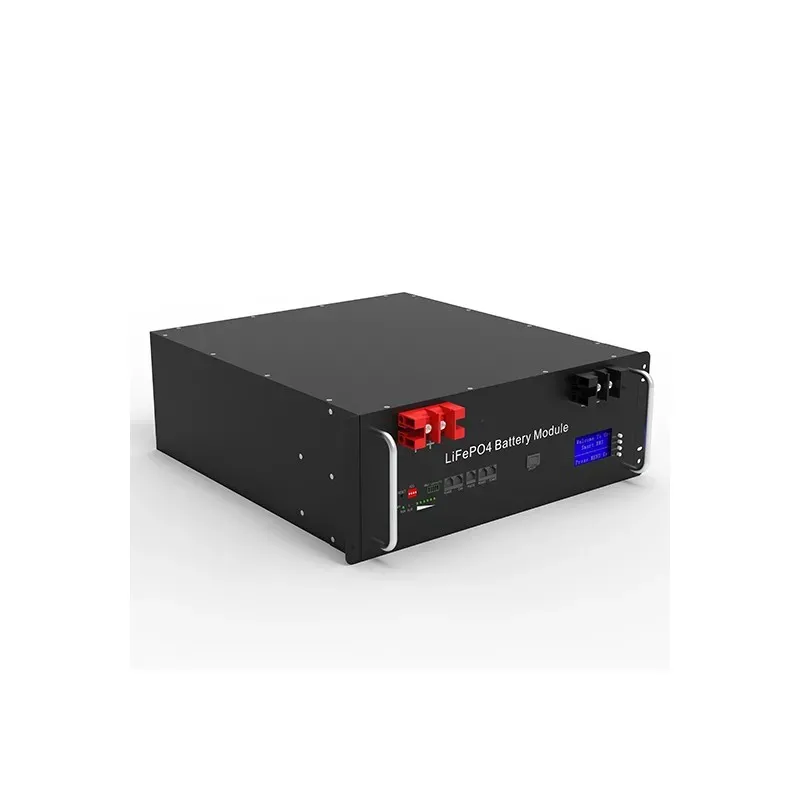
In today’s energy-conscious world, choosing the right Rack Battery for your solar and backup power systems is crucial. Whether you are a novice exploring renewable energy options or an experienced user optimizing efficiency, this guide offers a comprehensive approach to sizing your rack battery effectively. With ZEMBATT's advanced technology and trusted solutions, we’ll walk you through the essential steps for a successful battery sizing strategy.
First, you need to assess your energy needs. To start, evaluate your daily energy consumption, which is the sum total of your electrical appliances’ wattages (measured in watt-hours). A simple way to gauge this is by using the following formula:
Daily Energy Consumption (Wh) = Total Watts of Appliances × Hours of Use
Once you have this figure, it becomes your baseline. For instance, if you have devices that consume 500 watts for 4 hours daily, your total would be 2,000 watt-hours. This will guide you in determining the capacity of the rack battery required for solar and backup power.
Next, it’s vital to consider the battery discharge depth (DoD). Most batteries have a maximum DoD, often around 80%. To ensure a longer lifespan and optimal performance, aim to operate within this limit. Using our previous example, if you need 2,000 Wh and your battery allows for an 80% DoD, the required capacity would be:
Battery Capacity (Wh) = Daily Energy Consumption / DoD
Capacity = 2,000 Wh / 0.8 = 2,500 Wh
Thus, your rack battery should have a minimum capacity of 2,500 watt-hours.
After determining capacity, the next step is to select the appropriate battery technology. Common options include Lithium-ion and Lead-acid. Lithium-ion batteries, like those offered by ZEMBATT, provide higher energy density, longer lifespan (up to 10 years), and greater efficiency compared to traditional Lead-acid batteries. If your needs are dynamic or you experience frequent power outages, I would recommend prioritizing Lithium-ion for its superior performance.
Practical advice also comes into play when choosing the configuration of your battery rack. Rack batteries come in various configurations; a parallel connection may be suitable for those requiring increased capacity without expanding physical footprint, while a series connection can elevate voltage to match specific inverters. It’s essential to reference compatibility with your solar system. Resources like ZEMBATT’s design tools can assist with ensuring the right configuration is selected based on your current setup.
When sizing your rack battery, it’s also useful to explore case studies. For instance, a small commercial business I consulted successfully implemented ZEMBATT's rack solutions and increased their energy reliability by 40%. They reported smoother operations during peak hours and considerable savings on energy costs. Their choice of Lithium-ion batteries allowed for a compact, efficient energy system that suited their spatial limitations while powering complex energy needs.
However, challenges may arise. Installing a rack battery might pose technical hurdles; ensure you check local codes and standards, such as IEEE for electrical safety. Familiarize yourself with guidelines regarding installation and maintenance to mitigate risks. Regular monitoring of battery health, temperature, and cycle count becomes paramount for longevity. ZEMBATT suggests utilizing advanced battery management systems that can provide real-time data to preemptively address potential issues.
To recap, sizing your rack battery for solar and backup power requires a methodical approach:
Implementing these steps thoroughly with ZEMBATT’s trusted solutions positions you to harness energy more effectively and sustainably. Embrace the transition to renewable energy and enjoy the multitude of benefits that well-sized rack batteries can deliver in optimizing your solar and backup power systems!
By applying these insights, I am confident you can set forth on your journey into energy independence successfully!
Latest News

Hot Products
More Products